2023, Directed by Greta Gerwig
It wasn’t until Ruby Warrington (author of Women Without Kids) posted on Instagram about Barbie being a child-free icon that this film even caught my eye. And then it seemed it was absolutely everywhere I looked. [SPOILERS AHEAD]
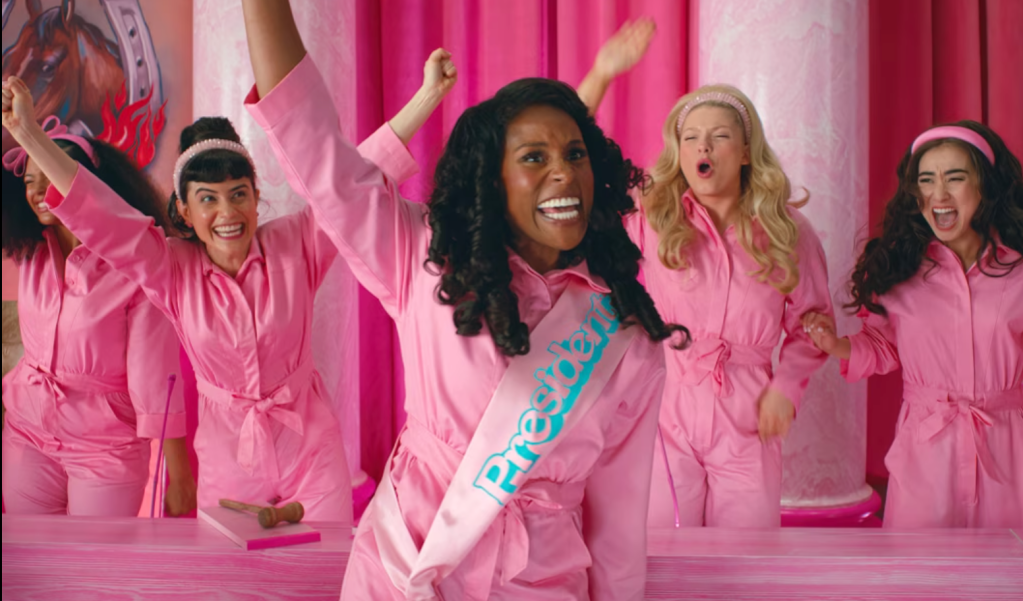
I loved Barbie as a kid. I had a friend a few years older than I was who had dozens of Barbies, and playing at her house was the pinnacle of fun because there was an endless supply of new outfits for Barbie. When she outgrew the dolls, she gifted them to me. It’s still one of the most thrilling things I can remember receiving. But as I got older, I started to see the problems with Barbie: she was too thin and too tall. She was beautiful and shiny, but impossible to emulate.
The film does not shy away from this issue. Barbie represents materialism and sets a beauty standard that can make women feel inadequate. But the film also shows us everything that Barbie can also represent: a world where Ken “exists only within the warmth of [Barbie’s] gaze” (a brilliant twist on the male gaze). Where every night is girls’ night. Where the President is not only Black, but a woman, as are all the Supreme Court justices. Where the Barbie who receives the Nobel Prize simply says, “I deserve this.” There are no children in Barbie’s world, and this is because Mattel (which plays a major role in the film) never made Barbie a wife or a mother. When Ken asks to stay over at the dream house, Barbie simply says, “I don’t want you here.” The world is built around what the Barbies want, and the Kens simply exist in it.
The film brilliantly balances the freedom of Barbie Land with the patriarchy of the real world. When Barbie steps into LA, her first feeling is self-consciousness. And from there, things get worse for her while getting immensely better for Ken. She has to learn the rules of the patriarchy, which hit so close to home, it genuinely hurts. One example: “Any power you have must be masked under a giggle.”
One point that was especially interesting to me was the Barbies’ susceptibility to patriarchal control. When Ken introduces it, they embrace it. “It’s like a spa day for my brain,” says one Barbie about giving up her career and existing to serve her Ken. The idea is that because they haven’t experienced patriarchy, they easily fall victim. Today, the feminist movement is undermined by the “tradwife” trend and women advocating for losing reproductive rights. The problem is, in real life, these “tradwives” have experienced the patriarchy. They should know better, but seem to prefer the “spa day for my brain” approach. I suppose it’s fine to choose that on an individual basis, but what about when those choices impact the lives of other women who want and deserve other things?
But let’s talk about Gloria’s (played by America Ferrara) much-lauded speech about the complications of being a woman under the patriarchy. It includes the line: “You’re supposed to love being a mother, but don’t talk about your kids all the damn time. You have to be a career woman, but also always be looking out for other people.” She doesn’t say you have to be a mother, but if you are one, you must love it while not annoying anyone else. Without getting into the mother and/or career debate, she says that career women must of course still take care of other people. I assume this carefully-worded pair of sentences is due to the fact that Barbie very deliberately has no children — she’s not capable of it because she has no genitals (which she announces during the film). Although the second phrase doesn’t include the word “mother,” it does raise the point that women are supposedly natural caregivers, which is why we are branded as destined for motherhood. It is implied that if a mother does have a job apart from parenting, she must be great at both.
It’s worth noting that until the patriarchy infiltrates Barbie Land, the Barbies took care of no one but themselves. They wake up in the morning, happily greet each other, get dressed and make breakfast for one. The Kens are more friends than romantic companions, and take up only as much time as the Barbies allow. Is their immense success and independence due to the fact they don’t have children, or that the men are not in charge? I would say the latter.
The Barbies reclaim their power by naming and shaming the “rules” of the patriarchy, and then by using the Kens’ egos to turn them against each other. (An aside, but Robert Downey Jr was quoted recently as saying that “men start wars” in regard to his film Oppenheimer. It is a bit disconcerting to see that demonstrated in two entirely different films in succession.) If only this approach could work in real life. Somehow, even when all the men are distracted with fighting each other, the women still lose.
 Monica Cardenas